From the Editor
In May I had the opportunity to attend the American Dairy Science Association’s 47th Discover Conference on “Dairy cow resilience: Mitigating stress impacts to welfare, health and production.” The Discover Conference format is built around opportunities for all attendees to discuss each set of presentations in a common ballroom. These discussions are inevitably eye-opening and provide useful perspectives across industry stakeholders. This particular conference had something for everyone with its breadth of focus including animal, farmer, industry, and financial resilience.
From my perspective the conference’s initial discussion regarding the definition of resilience was particularly useful as it highlighted differences between resilience and robustness. If resilience is based on coping with variability alongside short-term flexibility and elasticity, then robustness is based on coping with harshness alongside long-term plasticity and/or resistance. It occurred to me that while I have been broadly focused over the years on aspects of animal resilience in the face of inevitable variability, in many ways the past few years of research have been exploring animal robustness. I think this is best thought of in terms of elasticity versus plasticity. If elasticity (resilience) refers to an animal’s ability to return to its original form or its ‘normal’ state, then plasticity (robustness) implies that an animal may change (sometimes permanently) when a stressor is applied but still maintains functionality.
As we wrap up the fifth year of a project following cohorts of calves through their second and in some cases third lactations, the power of a robust adaptation in the face of adversity often seems like the best possible outcome. I say this because robustness may provide information about the individual animal (or a farm or system) which can facilitate comparisons based on multiple components including the resilience to each challenge. This is nicely summarized in an Opinion paper by Llonch et al that points out that robustness should be measured as a multidimensional attribute affecting either the whole animal or system, making comparisons between individuals or systems more plausible than resilience, as what is measured is the outcome rather than the relative response.
As we progress through the final stages of the project mentioned above, we are looking forward to fleshing out longitudinal assessments of resilience and robustness. As an example, we have copious data showcasing the ability of pre-weaned calves with pneumonia and lung consolidation to ‘bounce back’ and appear otherwise ‘normal’. I would classify those calves as resilient. However, perhaps more importantly we should recognize the robustness and adaptive responses of the non-diseased calves that maintained functionality in a challenging environment.
In order to assess the degree of robustness and resilience in individual animals (or systems) we need to observe those adaptive responses. We are extremely lucky to have such incredible dairy partners on this project who have allowed us to monitor these animals over the years with a goal of eventually defining more clearly what it is that makes an animal robust. How do they respond immunologically during an exposure to an infectious stressor? How do they respond years later to metabolic stressors? The fact that we were and are able to follow these cattle over the years has provided a treasure trove of information that we look forward to sharing. Stay tuned!
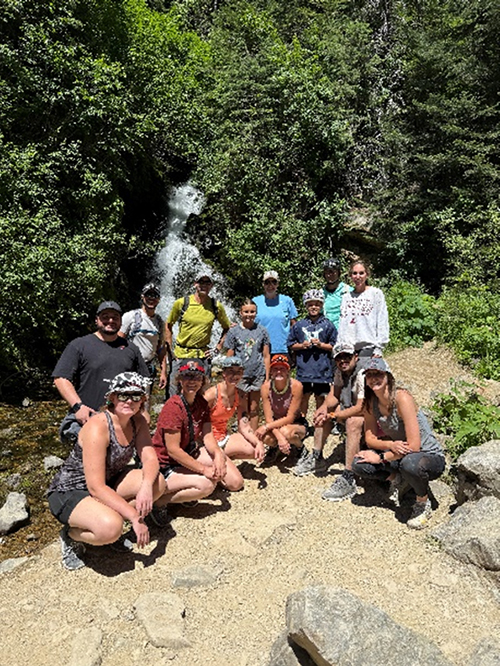
On a (un)related note, our FDIU group is going gangbusters this summer with multiple projects including assessing small ruminant disease prevalence within submissions to WADDL, creating enhanced biosecurity plans for dairies in WA, evaluating uterine health in dairy cattle, and establishing baseline youngstock management practices on organic dairies in WA. But perhaps the best project of all was our outing to the Hiawatha trail which some would argue required both resilience and robustness to survive the dark and the cold of the tunnels, and the dizzying heights of the old railroad trestles! It is a truly beautiful area with some incredible history related to the Milwaukee Railroad, historical mining endeavors, and the 1910 fire. I think all of us who did the ride would highly recommend it for an outing. We hope that all of you had a wonderful 4th of July holiday and are carving out some time for summer activities as well!
Due to unforeseen limited staffing, only large animal mobile services will be available for routine care Monday–Friday, 8 a.m. – 5 p.m. The hospital is taking all reproductive agricultural animal emergencies, but at this time, it cannot take non-reproductive emergencies. If you need emergency or after-hours services for non-reproductive agricultural animal emergencies, please contact your local veterinarian. Equine services are not affected by these staffing changes and are seeing emergency and after-hours patients. The hospital is actively recruiting to fill agricultural animal staffing gaps.
Stories in this issue
- Recent updates on BRD management: A spotlight on antimicrobial stewardship and genomic selection. Bovine respiratory disease (BRD) complex remains one of the most common and costly livestock diseases worldwide.
- Latest developments in mastitis management A highlight of a few papers and abstracts published in 2025.
- History of screwworms in the U.S. The economic impact of the New World screwworm making its way into the US would be significant
- Parasitology: Digital Parasite Identification now available at WADDL The Washington Animal Disease Diagnostic Laboratory is excited to announce a new service designed to streamline parasite identification for producers and veterinarians.
- American Dairy Science Association 2025 Abstracts of FDIU origin Differences in liver metabolism, inflammation, and behavior associated with vaginal discharge characteristics in peripartum dairy cowsLong-term changes in endometrial morphology and functionality in dairy cows with metritisDifferences in uterine and plasma metabolome associated with vaginal discharge characteristics in postpartum dairy cowsAssociations of preweaned lung consolidation on the periparturient peripheral leukocyte transcriptome in primiparous Holstein dairy cows
- Toxicology: Mineral testing Mineral testing is very beneficial in keeping productivity high and animals healthy. However, minerals are also very complicated and trying to efficiently and effectively sample herds can feel like navigating a labyrinth. Here are some tips and tricks to try to simplify sampling for minerals.
- WSU Ag Animal Faculty Research Updates, July 2025 From in vitro development to accessible luminal interface of neonatal bovine-derived intestinal organoids
- WSU College of Veterinary Medicine senior paper highlights, July 2025 An Overview of Neonatal Maladjustment Syndrome in CalvesPostpartum Disease in Dairy Cattle: Diagnosis, Treatment, and PreventionDeveloping a 3-Dimensional Trophoblast Cell Culture System to Study Fetal Maternal Interactions in CattleListeria monocytogenes: Impacts on Cattle and PeopleEvaluating Johne’s Disease Prevalences, Testing Modalities, and Diagnostic Trends in Domestic Sheep and Goats through the Washington Animal Disease Diagnostic Laboratory