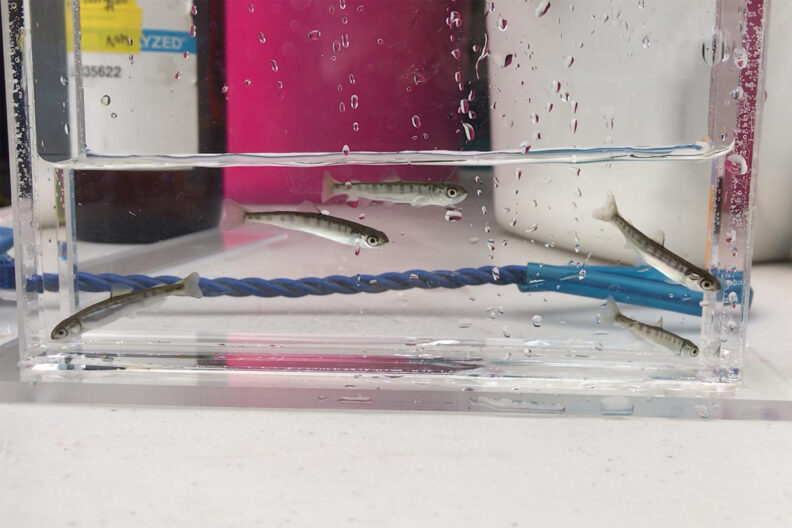
Welcome!
The Washington State University College of Veterinary Medicine is excited to bring you this inaugural edition of our Aquaculture Outreach Newsletter. As Dean Borjesson highlighted in her February 2026 Dean’s Message, WSU’s College of Veterinary Medicine is a regional and national powerhouse of aquatic animal health. This biannual communication will highlight aspects of the college’s work that will be of interest to veterinarians, producers, and other stakeholders working in the aquaculture sector.
Our featured stories in this issue cover antimicrobial susceptibility testing for aquatic bacteria and best practices for fish transport, inspired by suggestions from you. In case you missed them, we have other stories about diagnostic testing and fish pathogens on the Washington Animal Disease Diagnostic Laboratory (WADDL) website, and we will be building up more aquaculture topics on the Veterinary Medicine Extension website going forward. We always appreciate hearing from you, so please reach out with feedback and content ideas.
For our veterinarian readers, we want to especially draw your attention to our quarterly Pacific Northwest Fish Vet Rounds, a new collaboration between WSU and Dr. Tim Miller-Morgan at the Oregon State University College of Veterinary Medicine. The next rounds will be on Monday, November 2, 2026 at 1300 Pacific Time. Please join us as a participant or case presenter. For more information, please e-mail Dr. Hickey.
And lastly, we enjoyed connecting with you at the US Trout Farmers Association annual meeting in Twin Falls, ID, and the 10th International Symposium for Aquatic Animal Health in Bodø, Norway. Please keep an eye out for us at future meetings and always come say hello!
Stories in this issue
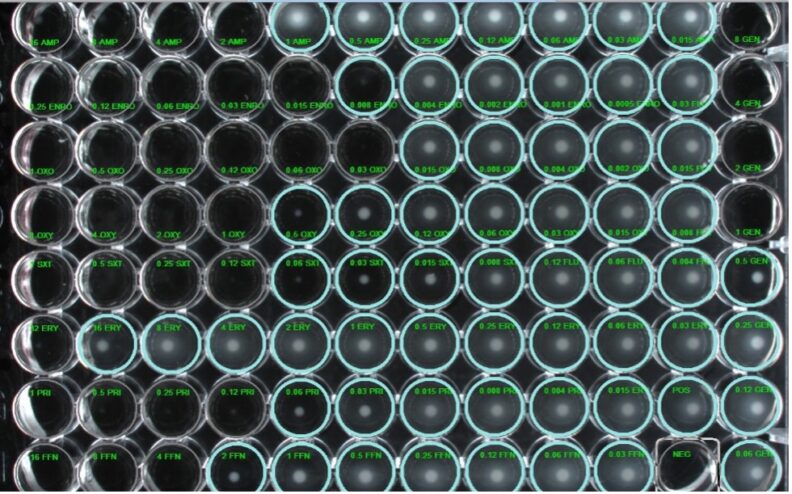
WADDL updates
WADDL is excited to announce that in collaboration with the Zebrafish International Resource Center, they are offering a screening panel for common zebrafish pathogens. More about the new panel.
And as a reminder, WADDL can perform wet mount evaluations for external parasites on skin, fin, and gills. These samples are usually best taken from live or fresh fish carcasses, so please contact us in advance to arrange for this testing!
New publications in Aquatics
From Dr. Hickey
- Polley, Tamsen M., et al. “Review of Major and Minor Pathogens of Adult Pacific Salmon (Oncorhynchus spp.) in Freshwater in the Pacific Northwest of North America” Pathogens 15.1 (2026): 87.
From Dr. Pessier
- Pessier, Allan P. “Amphibia” Pathology of wildlife and zoo animals (2026): 903-930.
From Dr. Waltzek
- Gordon, Lawrence M., et al. “A novel adomavirus from proliferative skin lesions of a broadnose sevengill shark (Notorynchus cepedianus)” npj Viruses (2026).
Seen at WSU’s College of Veterinary Medicine
By Dr. Oliveira
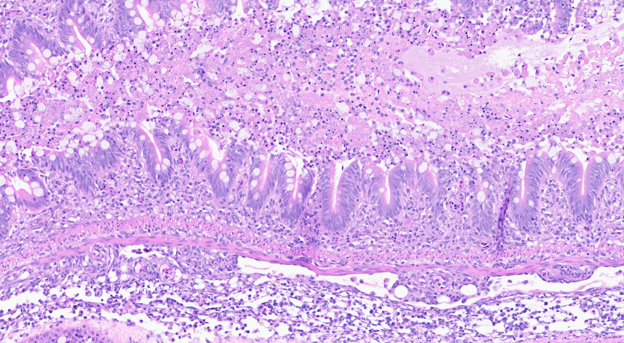
Necrosis fills the rectum, inflammation fills the peritoneum, and swarms of filamentous bacilli teem unseen in a case of bacterial cold water disease (Flavobacterium psychrophilum) in a rainbow trout.