It is not breaking news that yearly temperatures on Earth have been consistently rising. Indeed, data released from NASA’s Goddard Institute for Space Studies – GISS show that the global land-ocean temperature index has consistently increased after the 1900’s (Figure 1). Regardless of the many factors that have been tied to the increase in global temperature (some that were addressed in previous WSU VetMed Extension Articles), it is evident that the agriculture is affected by such changes, including the dairy industry. With increased global temperatures, the occurrence of heat stress (a condition that occurs when the body is exposed to excessive heat, leading to an inability to regulate body temperature effectively) and its associated detrimental impacts are more likely to be observed (particularly in dairy cattle). A recent study projected the decadal increases in average heat stress frequencies by 2100, and revealed that the majority of the U.S. regions will have at least 6 to 8 additional days under heat stress/decade until 2100 (Gunn et al., 2019; Figure 2). Because of the expected differences in climate, it is important that dairy industry stakeholders work together to further 1) understand the complexity and underlying mechanisms of heat stress impacts, and 2) develop alternative strategies to mitigate the detrimental impacts of heat stress. With that in mind, this article focuses on reviewing some of the key aspects related to heat stress impacts on cattle development, health and performance, industry economics, and mitigating strategies.
Historically, the temperature-humidity index (THI) has been the mechanism used to determine when dairy cows are heat stressed. Although there is some variation on THI cut-offs the consensus was established as a THI between 68 and 70 (Zimbelman et al., 2009; Chen et al., 2024). Guinn et al. (2019) described the differences in mean THI between summer and winter months in the U.S. for the last 10 years (69.5 vs. 39.3, respectively), highlighting that without any heat stress abatement strategies U.S. dairy cows could be under heat stress conditions for most of the summer months. In fact, the same study revealed differences in productive and reproductive performance between summer and winter, illustrated by reduced milk production and pregnancy rates in summer compared with winter months. Similar results were also reported by other authors, including lowered pregnancy rates in warmer months compared with colder months of the year (Hansen, 2009). Both Tao et al. (2020) and Ouellet et al. (2020) depicted the detrimental impacts of heat stress on milk production and dry-matter intake (Figures 3 and 4). Other studies have demonstrated the effects of heat stress (or contrast between warmer vs. cooler months) on the occurrence of diseases, culling, and cow welfare. For instance, cows that calved in warmer months were observed to have greater odds of retained fetal membrane (Odds Ratio = 1.6), subclinical ketosis (Odds Ratio = 2.3), displaced abomasum (Odds Ratio = 1.8), and mastitis (Odds Ratio = 1.1) as compared with cows that calved in cooler months (Pinedo et al., 2020). Al-Qaisi et al. (2020) observed a greater somatic cell count in milk from cows exposed to heat stress conditions as compared with cows exposed to thermoneutral conditions, and cows that calved in the summer were more likely develop metritis as compared to cows that calved in cooler months (Molinari et al., 2022). Furthermore, Vitali et al. (2015) reported higher mortality of cattle during heat wave periods compared to subsequent periods, and an association of mortality and heat wave duration (Figure 5). Heat stress conditions have also been associated with welfare issues in dairy cattle, as cows under heat stress conditions remain in a standing position for greater periods of time (possibly contributing to lameness issues) and have greater blood cortisol levels than cows under thermoneutral conditions (Cook et al., 2007; Allen et al., 2015; Al-Qaisi et al., 2020). Considering the effects of heat stress on cattle performance, mortality, and welfare, it is not a surprise that economic losses occur. Specifically, data published in 2003 estimated that heat stress conditions cause up to $2.3 billion/year in economic losses to livestock production ($2.9 billion in 2024 considering inflation). Under heat stress abatement strategies, the economic losses drop down to $1.7 billion/year and the dairy industry represents over 50% of the costs ($897 million; St-Pierre et al., 2003). A component to heat stress in dairy cattle that has received a lot of attention is the “in utero” heat stress on dairy calves. Recent studies highlighted the carryover effects of late gestational heat stress on the progeny, illustrated by lowered birth weight (-4.6 kg), lowered weaning weight (-7.1 kg), and reduced longevity (Ouellet et al., 2020). Moreover, the occurrence of heat stress during the dry period is also associated with differences in offspring mammary gland structure (Dado-Senn et al., 2019), adrenal gland development (Guadagnin et al., 2024), behavior (Laporta et al., 2017), and hormonal/metabolic biomarkers (Guo et al., 2016). Lastly, combined studies have shown the legacy effect of heat stress on offspring, as lactational performance of such offspring is also different compared to offspring generated by dams under thermoneutral conditions (Ouellet et al., 2020; Figure 6). The research findings related to the legacy effect of heat stress on offspring add another layer of importance to the topic, and suggest that the detrimental effects and economic losses previously described are potentially underestimated.
Although the complex mechanisms that underlie the detrimental effects of heat stress on lactating dairy cows are not yet fully elucidated, studies have demonstrated biological changes associated with heat stress. For instance, lipopolysaccharide-induced accumulation of IL-1β, IL-10, and MIP-1α was greater in blood collected from postpartum cows that were under prepartum heat stress conditions as compared with control cows, implying that prepartum heat stress has carry-over effects on postpartum innate immunity, which may contribute to the increased incidence of uterine disease observed in cows exposed to prepartum heat stress (Molinari et al., 2023). Other studies have depicted differences in gut, ovary, muscle, and metabolism morphology/function associated with heat stress, which could be tied to the occurrence of subsequent diseases, animal performance, reproductive performance, and mortality (Baumgard and Rhoads Jr, 2013; Fernandez et al., 2015; Hale et al., 2017; Ross et al., 2017; Fausnacht et al., 2020; Mayorga et al., 2020; Tang et al., 2022; Roths et al., 2023). Last but certainly not least, and certainly not depicting the entirety of the mechanisms of heat stress associated with cow performance, cows under heat stress conditions have reduced feed intake (Rhoads et al., 2009) and reduced energy substrate adaptability in skeletal muscle, possibly contributing to reduced performance (Ellett et al., 2025).
Given the detrimental impacts of heat stress on cattle performance, health, and welfare, it is important to consider the region-specific variations in climate and implement heat abatement strategies as needed. There are a variety of heat abatement strategies available for dairy calves, heifers, and cows that can be implemented in dairy operations. Multiple studies have tested the effects of different strategies for heat abatement in calves. For instance, Dado-Senn et al. (2020) reported a positive association between postnatal heat stress abatement and thermoregulatory responses, feed intake, and health in dairy calves. Montevecchio et al. (2022) reported a positive relationship between pre-weaning heat stress abatement and lying behavior and healing time (related to disbudding) in dairy calves. The same group also reported positive welfare-related responses and greater wither-height for calves given heat abatement strategies as compared to calves under a simple plywood hutch (Montevecchio et al., 2022). Benefits for heat abatement in heifers and cows were also reported. For instance, the use of shade from a freestall barn, water soakers, and fans were associated with positive effects on heifer thermoregulation and productivity as compared with heifers kept under freestall shade only (Davidson et al., 2021). Gunn et al. (2019) described the milk production losses (per cow/year) according to different heat abatement strategies, ranging from minimal (open barn or shading) to intense (air conditioning). Aside from structural tools to improve heat abatement for dairy cattle, other studies have reported varying results associated with nutritional tools to ameliorate the impacts of heat stress in dairy cows, including chromium supplementation (Soltan, 2010), Saccharomyces cerevisiae supplementation (Al-Qaisi et al., 2020), choline (Holdorf and White, 2020), and other components (Fabris et al., 2017). The potential of other strategies for heat abatement have been described; for example, a research group from the University of Florida reported that the SLICK haplotype confers thermotolerance in intensively managed lactating Holstein cows (Dikmen et al., 2014). In that study, the authors revealed that cows carrying the SLICK haplotype had lowered rectal temperature and respiration rate across most times of the day compared with cows not carrying the SLICK haplotype. Although several aspects associated with the SLICK haplotype have not been explored, a recent study reported that SLICK Holstein cows in Puerto Rico exhibited lower body temperatures, greater voluntary solar radiation exposure, enhanced blood supply to the mammary gland, and alterations in genes and metabolites involved in arachidonic acid metabolism at the mammary gland and blood plasma (Contreras-Correa et al., 2024).
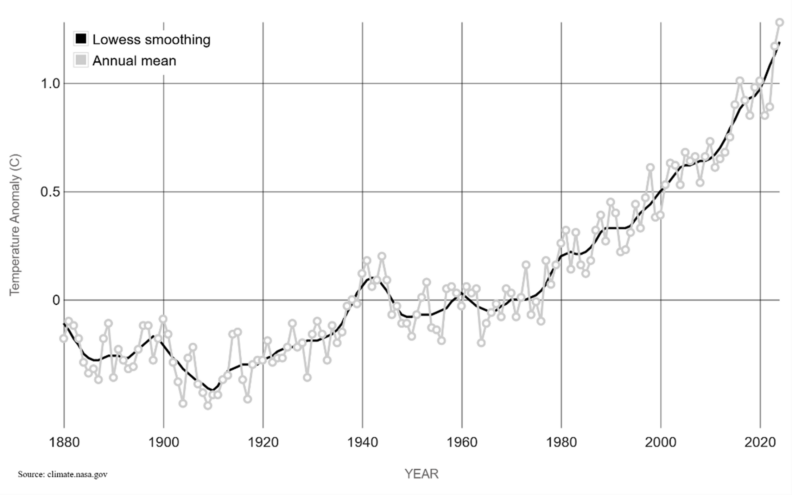
Figure 1. Global land-ocean temperature index (NASA’s Goddard Institute for Space Studies – GISS).
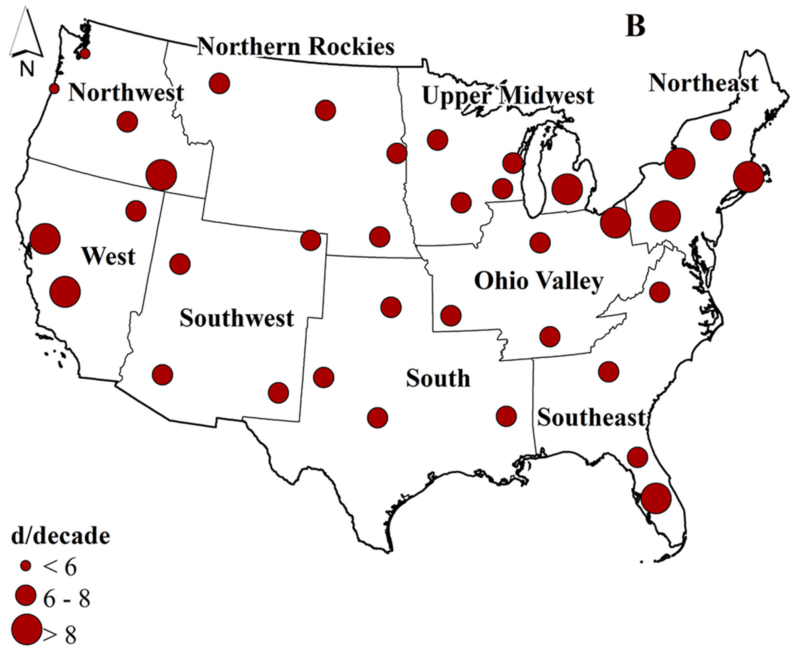
Figure 2. Projected decadal increases in average annual Heat Stress Frequency between 2000 to 2100 (Adapted from Gunn et al., 2019).
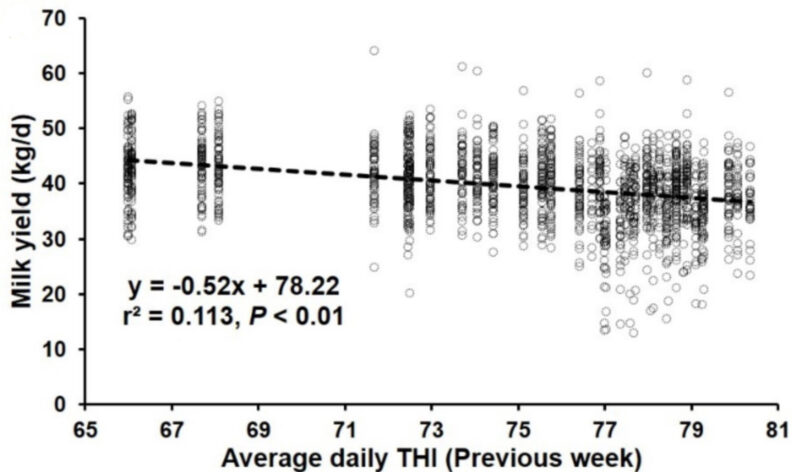
Figure 3. Correlation between milk yield and the average daily temperature-humidity index (THI) of the previous week. Circles represent individual observations, and dash line represents simple linear regression. All cows were housed in the same barn equipped with evaporative cooling, and fed similar lactating cow rations (Adapted from Tao et al., 2020).
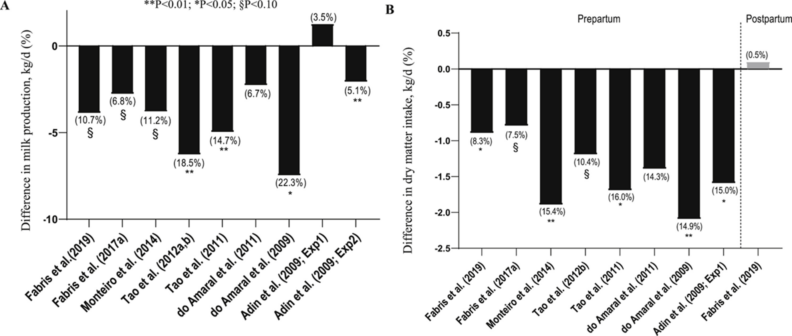
Figure 4. (A) Summary of difference (kg/d) in milk yield in late-gestation heat-stressed cows relative to cooled counterparts (average difference = 3.6 kg/d; 10.3%) and (B) difference (kg/d) in prepartum and postpartum dry matter intakes in late-gestation heat-stressed cows relative to cooled counterparts (prepartum average difference = 1.4 kg/d; 12.7%; postpartum difference = 0.1 kg/d, 0.5%). Adapted from Ouellet et al., 2020
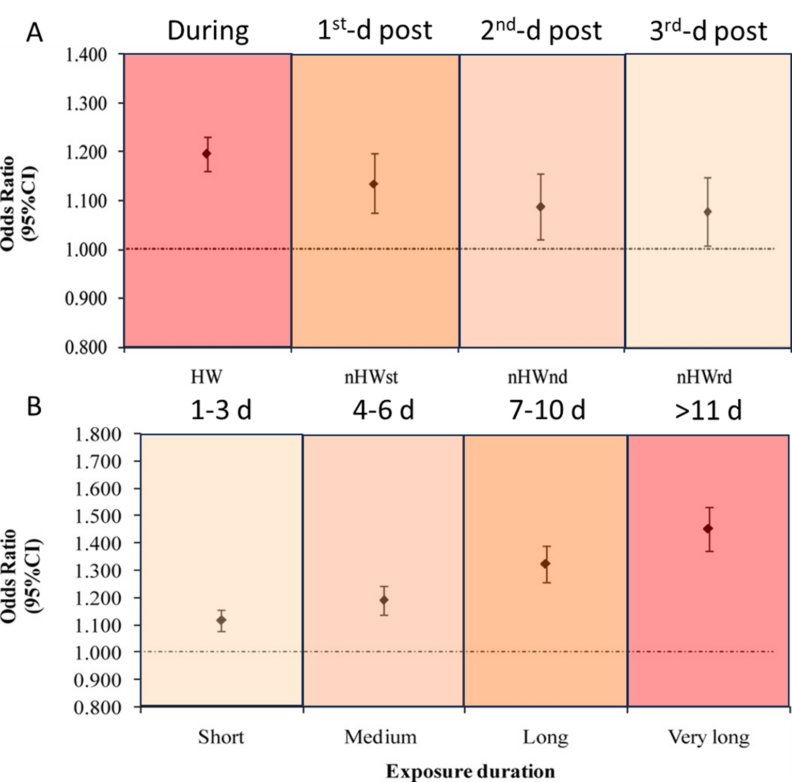
Figure 5. (A) Odds ratio and 95% CI calculated for dairy cow mortality during heat wave (HW) and in the 3 not heat wave days (nHW) after the end of heat wave (d 1, 2, and 3 defined as nHWst, nHWnd, and nHWrd, respectively). (B) Odds ratio and 95% CI calculated for dairy cow mortality in relation to the duration of exposure to heat. The duration of exposure was classified as short (1 to 3 heat wave days), medium (4 to 6 heat wave days), long (7 to 10 heat wave days), and very long (>11 heat wave days). Odds ratios are statistically significant when 95% CI does not include the unit (dashed line). Adapted from Vitali et al., 2015.
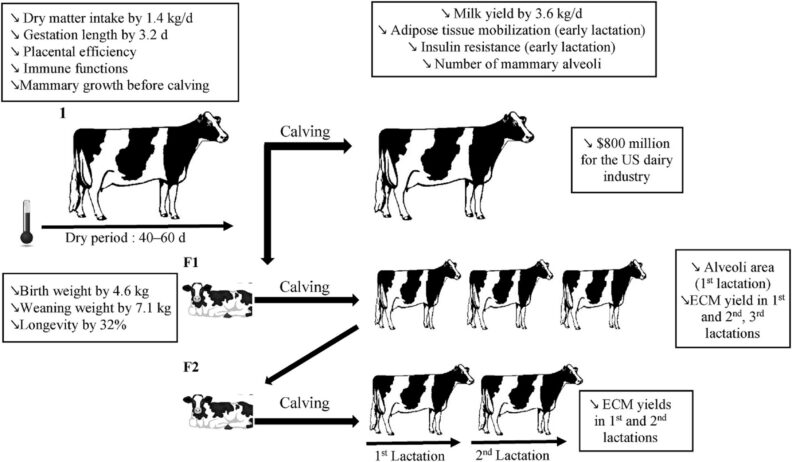
Figure 6. Summary of the performance impairments associated with late-gestation heat stress for the dam (1), daughters (F1), granddaughters (F2), and dairy sector (2) reported in a series of study (where ECM = energy corrected milk). Extracted from Ouellet et al., 2020.