On May 1, 2024, Dr. Sarah M. Smith, Extension Regional Specialist—Animal Sciences, reached out to Dr. Wenz and me to let us know that ranchers who were getting ready to turn cattle out to pasture were reporting large amounts of Lupinus leucophyllus (velvet lupine) in Central Washington. In fact, folks were commenting that the levels were exceeding anything they had seen in all the years they had been on certain grazing allotments. Sarah was wondering if there was anything we could recommend to help manage the impending issue to try and avoid crooked calves.
Unfortunately, this can be a difficult problem to avoid and sure enough this Spring there have been some reports of suspected affected calves with anomalies consistent with lupine-induced CCS such as the presence of arthrogryposis (flexure of a joint) of the forelimbs typically involving both the elbow and the carpal joints, and the variable presence of torticollis (wryneck, twisting of the neck), scoliosis, (lateral curvature of the spinal column) kyphosis (humpback, dorsal curvature of the spinal column), and cleft palate.
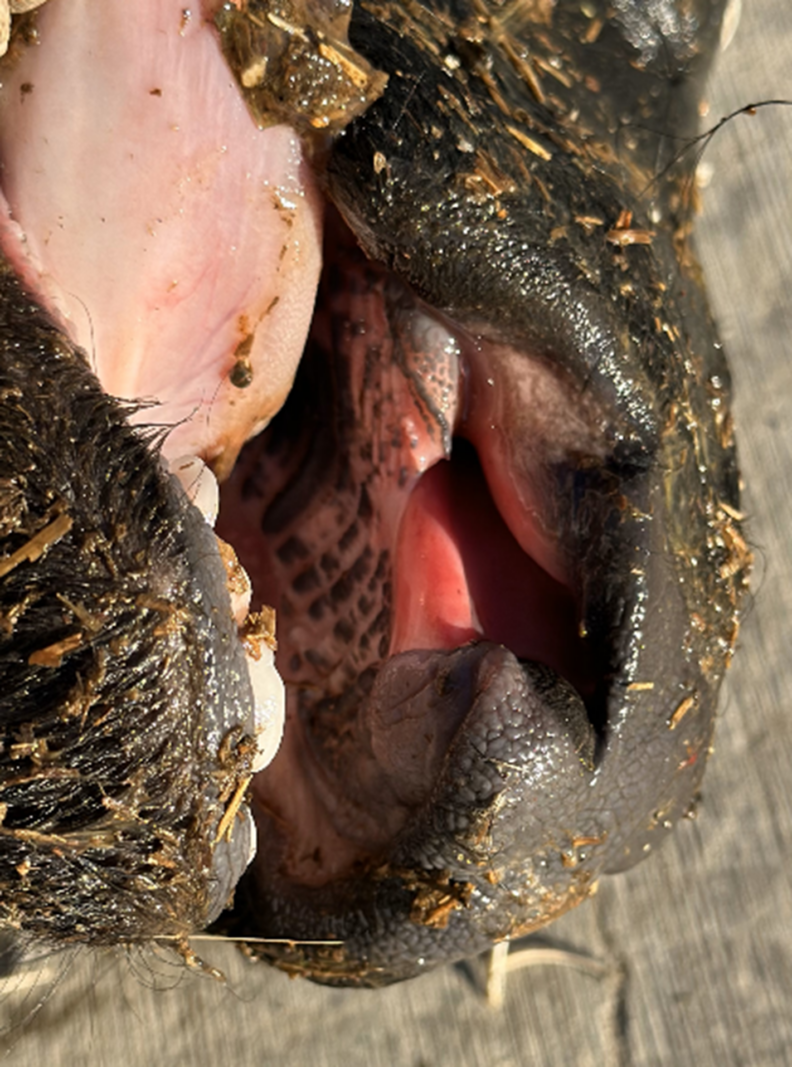
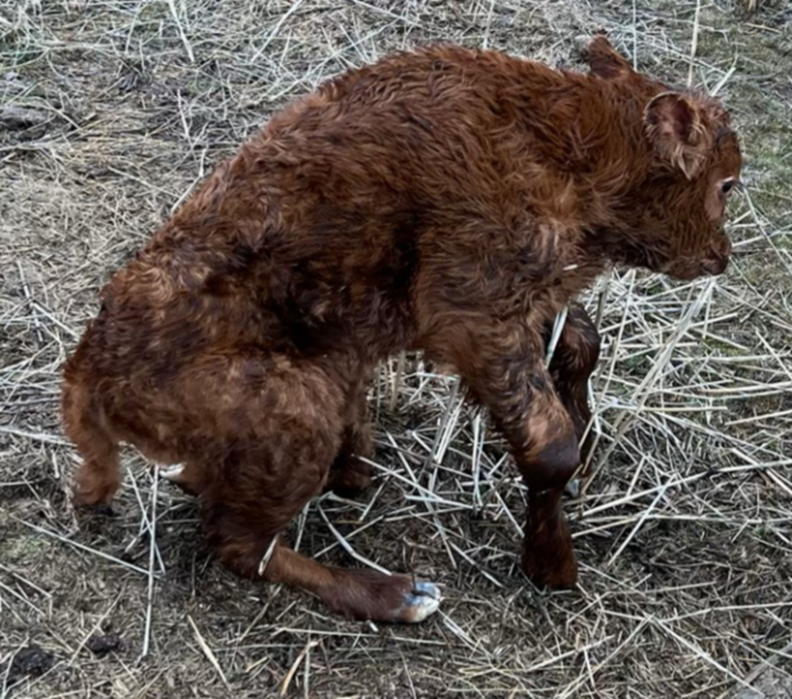
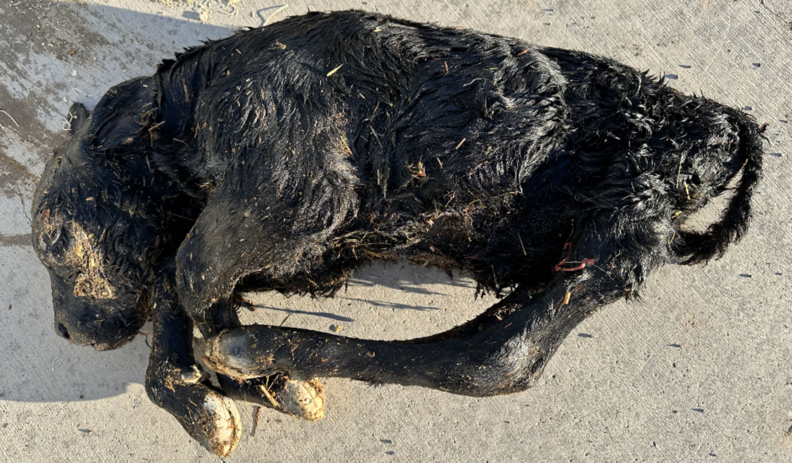
Collaborative research by FDIU and USDA PPRL Utah was previously summarized in an article entitled Crooked calf – lupine induced arthrogryposis. However, to further the conversation Dr. Wenz extracted some management recommendations from an article entitled Management Practices to Reduce Lupine-Induced Crooked Calf Syndrome in the Northwest (Rangelands 35 (2), 12-16, April 2013) and outlined below. Additional information regarding Lupinus spp. can be found on the USDA ARS website. Hopefully this year we will see less lupines across the rangeland, but it is always worth being prepared.
Management recommendations
Reducing losses from lupine-induced CCS requires multiple approaches to be successful. However, a simple rule may be applied: avoid grazing toxic lupines by pregnant cows during the susceptible stages of gestation (days 40–100) on pastures where lupines containing anagyrine and/or ammodendrine are present. Having said this, these ranges can be utilized optimally by following a few management practices:
- Identify potential poisonous plants (in this case, lupines) and determine which specific lupines are present.
- Determine the chemical profile of the lupine species. Risk assessment is based on alkaloid profiles and concentration of anagyrine or ammodendrine. Lupine plants may be submitted to the Poisonous Plant Research Laboratory in Logan UT for taxonomic identification and chemical analysis at no charge. Samples should be air dried and sent in a paper bag to Daniel Cook using the following address: USDA ARS PPRL, Attn: Daniel Cook, 1150 E 1400 N, Logan, UT 84341
- If anagyrine and/or ammodendrine are present, evaluate the concentration in relation to other alkaloids. Year-to-year variation in alkaloid concentrations may occur, affecting the incidence of CCS, but the overall alkaloid profile remains the same. Monitoring of this variation at global positioning system–identified sites on the WA scablands over the past several years suggests that a year in which there is a high concentration of anagyrine relative to other alkaloids is followed by a year of higher incidence of CCS. If ongoing research continues to support this finding, measuring alkaloid concentrations early in the growing season (May) would allow an early prediction of a year of higher incidence and enable ranchers to strategize alternates to lupine grazing during the summer months.
- Evaluate historical incidence of CCS on the range, lupine population cycles, range conditions, and forage quality and availability. Avoid overstocking as this may force cows to start grazing lupines earlier than expected.
- Adjust breeding schedules to avoid exposing pregnant cows to lupines when they are at highest risk (40–100 days gestation). Where high incidence of CCS occurred in multiple years, fall calving schedules have virtually eliminated CCS.
- Restrict access to lupine in late summer when cattle normally begin eating lupine and when anagyrine levels are elevated in seed pods.
- Use intermittent grazing, moving cows to clean pastures when lupine grazing is observed or pull “lupine eaters” as they start to graze lupine plants. This requires intense management and may not be practical for some ranchers. Once seed pods have shattered, cattle can be safely returned to lupine pastures.
- Utilize high-risk lupine pastures by grazing stockers, open heifers, or other livestock species to harvest forages. Lupine is nutritious forage, particularly on dormant rangelands dominated by annual grasses. Some ranchers have implemented this management strategy and successfully utilized their lupine-infested range and avoided crooked calves.
- Use herbicide control. Although generally not economical on large pastures, smaller ranches with few options may consider controlling lupines with herbicides. Lupine seed reserves are high in soil profiles and will germinate when conditions are right, therefore repeat treatment is required every 5–8 years. Herbicides may be used to clean up a pasture for use in the intermittent approach to managing lupine.