Causes, consequences, and prevention
Weak Calf Syndrome (WCS) falls under the larger umbrella term of APSW (abortions, premature birth, stillbirths, weak calves). WCS is used in both beef and dairy production systems to describe calves that are born alive but lack normal vigor. These calves are typically slow to rise, slow or unable to stand, and slow or unable to nurse without assistance. In many herds, weak calves are also associated with increased rates of stillbirth and early perinatal loss. Without rapid access to colostrum and an adequate energy supply, affected calves commonly deteriorate and may die within the first few days of life. Our most recent article addressing WCS was published approximately a decade ago through WSU Veterinary Medicine Extension (read the original article), and given ongoing advances in nutrition, genetics, disease management, and calf care, we believe it is timely to revisit this topic and incorporate updated perspectives.
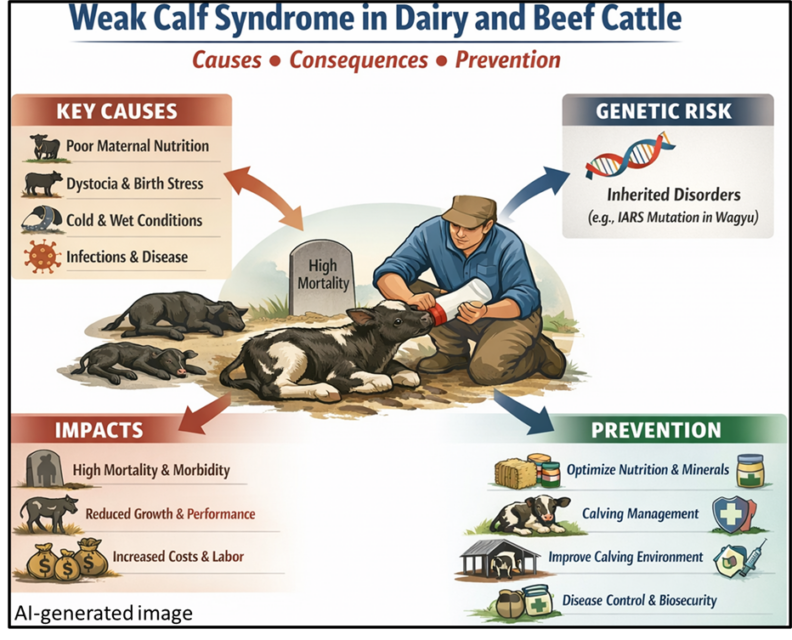
It is important to emphasize that WCS is a syndrome rather than a single diagnosis. The term reflects a consistent pattern of clinical signs that can arise from multiple, often interacting causes. In practice, weak calves frequently represent the downstream outcome of problems occurring during gestation, at parturition, and in the immediate postnatal period. Compromised fetal growth and development, difficult or prolonged calving with associated hypoxia or trauma, and early-life stressors such as cold exposure, delayed colostrum intake, metabolic derangements, and infection all contribute to the syndrome’s expression.
Among the most consistently identified drivers of weak calf syndrome is maternal nutrition, particularly during late gestation when fetal growth accelerates and colostrum synthesis begins. Suboptimal energy and protein intake during this period can result in calves with poor body reserves, reduced thermoregulatory capacity, and diminished vigor at birth. Extension guidance repeatedly identifies late-gestation nutrition as both a major risk factor and a primary prevention leverage point. Low-energy diets, especially in first-calf heifers or thin cows, poor body condition at calving, excessive condition loss before parturition, ration inconsistencies, bunk competition, and unaccounted increases in maintenance requirements during cold weather all increase the likelihood of weak-born calves (1Jung et al., 2025a). Trace mineral and vitamin status further modulates neonatal viability. Deficiencies in selenium and vitamin E are classically linked to neonatal weakness, impaired suckling ability, and poor survivability, including congenital presentations of weak calves. Clinical research has documented associations between serum selenium and vitamin E concentrations and weak calf syndrome outcomes (2Jung et al., 2025b). Although other micronutrients, such as iodine and copper, can also contribute indirectly by impairing thyroid function, immunity, and overall neonatal resilience (3Scott, 2009), selenium and vitamin E remain the most consistently emphasized in both field guidance and disease descriptions. Events surrounding calving itself may also play a central role. Dystocia and prolonged labor markedly increase the risk of perinatal hypoxia, physical trauma, delayed standing, and delayed nursing. Calves may be born alive but physiologically compromised, with reduced ability to thermoregulate and initiate an effective suckle response. Environmental conditions often compound these problems. Cold, wet, and windy weather dramatically increases neonatal heat loss and energy demands at precisely the time when weak calves have the least physiologic capacity to respond. Field observations frequently describe weak calf syndrome as a “perfect storm” in which marginal late-gestation nutrition, calving difficulty, and hypothermia converge. Infectious and reproductive disease pressures also contribute both directly and indirectly. Reproductive pathogens that impair fetal development or compromise the neonate are commonly cited in outreach materials, with bovine viral diarrhea virus (BVDV) often highlighted in beef systems. In addition, perinatal weak calf presentations are discussed within the broader context of pathogen surveillance and perinatal mortality syndromes, reinforcing the role of infectious disease in shaping calf viability (Mawatari et al., 2014). Although most cases of WCS are multifactorial and management-driven, genetic factors must be considered in specific populations. In certain Wagyu lines, for example, weak-calf presentations have been linked to inherited disorders such as the IARS mutation, described in breeding contexts as “perinatal weak calf syndrome,” which is associated with elevated late-gestation loss and early neonatal mortality. Breed organizations have promoted DNA testing and structured mating strategies to manage this risk.
The consequences of weak calf syndrome are substantial and extend beyond immediate losses. The most significant impact is increased perinatal mortality and compromised animal welfare. Weak calves are less likely to stand, nurse, maintain body temperature, and resist early-life infections, greatly increasing the likelihood of death or severe disease during the first days to weeks of life. Even when they survive, compromised calves often experience higher rates of neonatal diarrhea and pneumonia, delayed growth, and reduced weaning weights in beef systems. In dairy operations, early-life disease burden and suboptimal development may translate into reduced lifetime productivity of replacement heifers. From a management perspective, WCS imposes considerable labor and economic costs. Weak calves require urgent, high-intensity intervention, including warming and drying, assisted colostrum delivery, nursing support, correction of dehydration, acidosis, hypoglycemia, and close monitoring. During concentrated calving seasons, these demands can strain labor capacity and disrupt routine operations. Extension materials consistently note that many weak calves die without prompt and effective support. Importantly, when weak calves appear as a pattern rather than isolated cases, they often signal upstream system issues, such as late-gestation nutritional gaps, mineral program failures, inappropriate sire selection, inadequate calving facilities, weather exposure, or deficiencies in vaccination and biosecurity programs.
Reducing the incidence of weak calf syndrome begins with a deliberate late-gestation nutritional strategy that aligns ration formulation with body condition targets and environmental demands. Cows and heifers should calve at an appropriate body condition score and avoid excessive condition loss before parturition. Diets must be balanced to support fetal growth, colostrum quality, and maternal maintenance, with explicit adjustments for cold stress. Adequate bunk space and minimal competition are particularly important for heifers. An evidence-based trace mineral and vitamin program is equally critical. Operations should assess regional deficiency risks using knowledge of soil and forage patterns, herd history, and feed testing. Selenium and vitamin E should be supplied through properly formulated supplementation programs consistent with regulatory frameworks and veterinary guidance. When patterns of weak calves emerge, diagnostic testing of blood, feed, or forages can help confirm mineral status and guide targeted corrections. Dystocia risk can be reduced through integrated genetic and management tools. The use of calving-ease sires where appropriate, especially in heifers, appropriate heifer development to support pelvic growth, avoidance of extremes of body condition, and well-defined calving surveillance and intervention protocols all reduce the likelihood of prolonged labor and perinatal compromise. The calving environment should be structured to minimize hypothermia and delays to nursing. Dry bedding, wind protection, and contingency plans for extreme weather are essential. Compromised calves should be rapidly dried and warmed, and cow–calf pairs moved to sheltered areas when necessary to stabilize the neonate and facilitate early bonding and nursing. Reproductive disease prevention and biosecurity remain core components of WCS control. Herd vaccination programs should be aligned with regional disease risks and veterinary guidance, with particular attention to pathogens known to affect fetal development and neonatal viability, including BVDV. Where breed-specific inherited conditions are documented, such as the Wagyu IARS disorder, DNA testing and informed mating decisions are necessary to prevent carrier-to-carrier breeding.
Even with strong prevention programs, residual risk remains. For this reason, operations benefit from a written “weak calf” response protocol. Such protocols should define time-to-colostrum targets and delivery methods, warming and drying procedures, criteria for assessing thermal status, monitoring strategies for dehydration, acidosis, hypoglycemia, and early infection, and clear thresholds for veterinary involvement. Although response protocols do not prevent weak calf syndrome, they meaningfully reduce mortality and downstream disease when cases occur.
- Physiological alterations and predictors of death in neonatal calves with weak calf syndrome; Jung et al., 2025a
- Serum selenium and vitamin E concentrations in indigenous Korean calves with neonatal weak calf syndrome; Jung et al., 2025b
- Trace Element Deficiency in Cattle; Scott, 2009
- Surveillance of diarrhea‐causing pathogens in dairy and beef cows in Yamagata Prefecture, Japan from 2002 to 2011; Mawatari et al., 2014